Food recalls are rising. Here's what they cost hotels, resorts & cruise lines
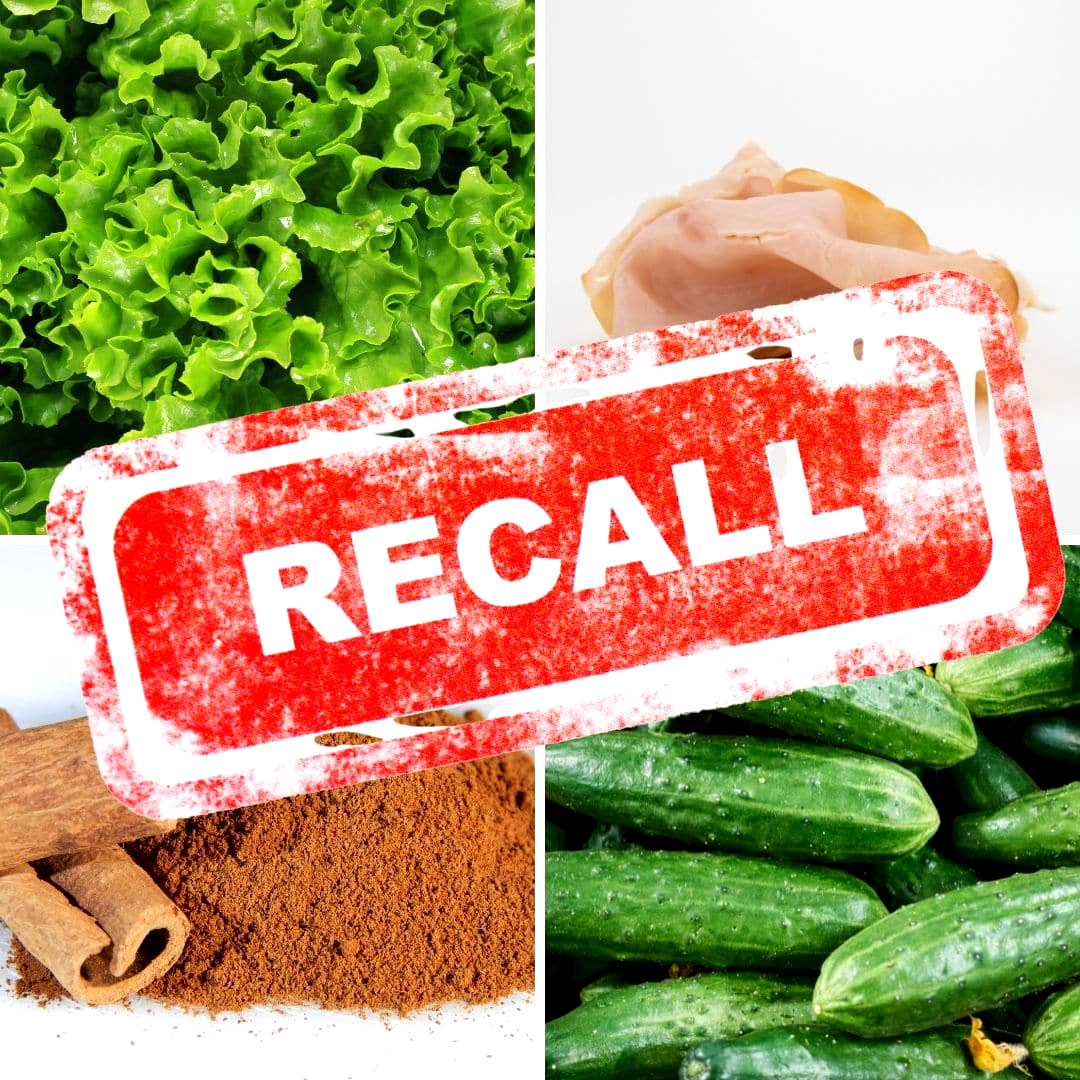
Food recalls hit a record high, and the cost to hotels, resorts & cruise lines runs far past dumped inventory. See the numbers and how to respond faster.
Learn moreWhen a Food Recall Hits, the Clock Is Your Biggest Liability
What the recall surge means for hotels, resorts, and cruise lines — and why response speed now decides the size of the loss
A recall notice lands at 6:14 a.m. A supplier has just pulled a product that's sitting in the walk-in coolers of forty properties, three central commissaries, and a fleet of ships already at sea. The contaminated lot needs to come off every menu, out of every cooler, and away from every guest — now. The question that determines whether this becomes a line item or a crisis isn't whether your teams will act. It's how fast they can all act at once.
For hospitality and travel operators, that question is getting asked more often than ever.
Learn how to respond fast and decrease losses
Recalls are climbing, and the exposure is industry-wide
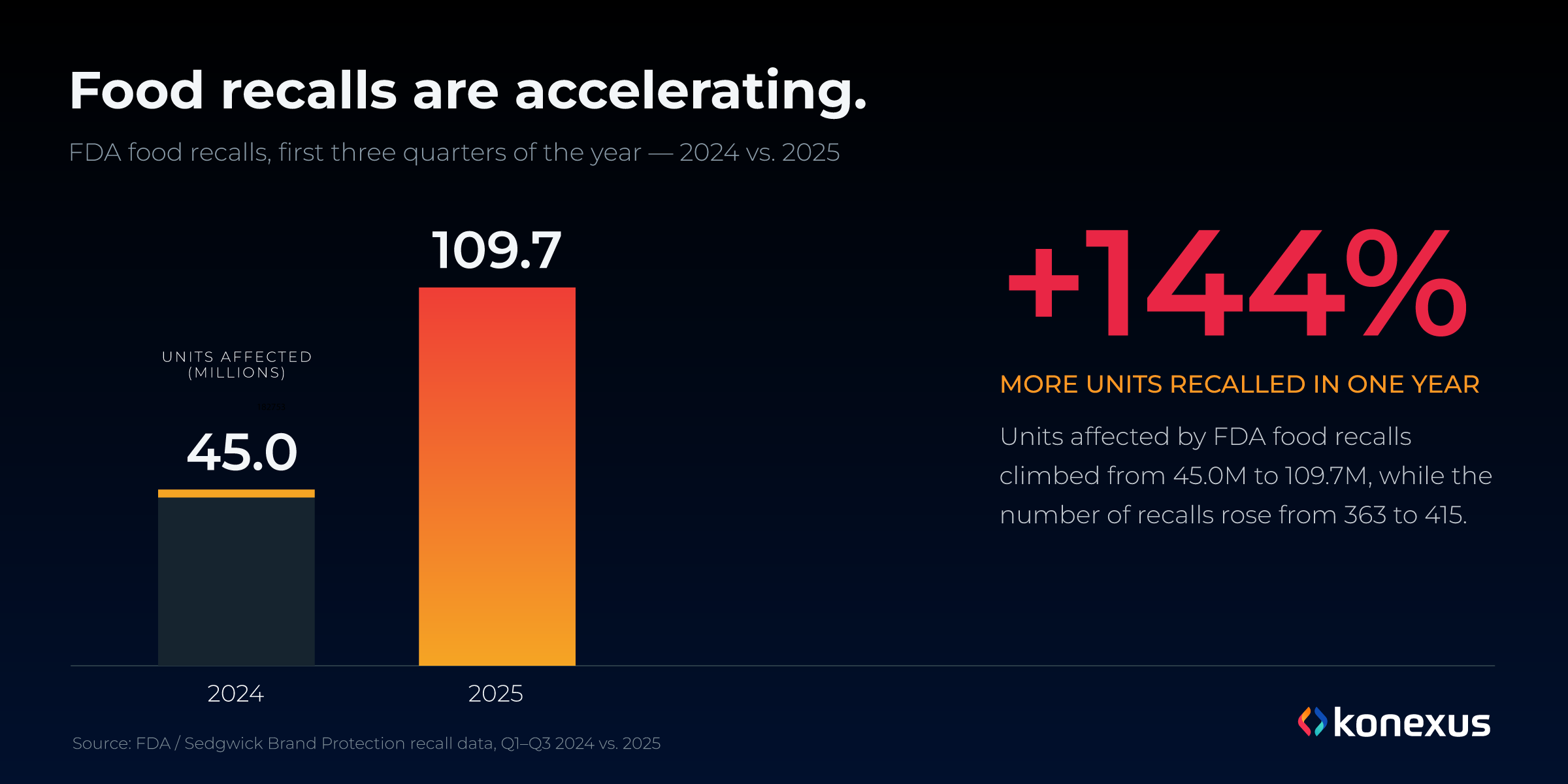
Food and beverage recalls are running at record levels. In the U.S. and Canada, recalls hit roughly 300 in 2024 — a record — carrying an estimated $1.92 billion in direct costs to the industry, according to FDA figures. The trend accelerated into 2025: through the third quarter, the FDA logged 415 recalls affecting nearly 110 million units, compared with 363 recalls touching 45 million units over the same stretch in 2024. This isn't a North American story alone — EU food alerts rose about 12% and UK alerts climbed roughly 10% over the same period.
The travel sector feels this acutely because of how and where its guests eat: shared buffets, high volume, and close quarters. The CDC recorded 16 gastrointestinal outbreaks on cruise ships in 2024 — a 12-year high — affecting 1,894 passengers and 245 crew. By mid-May of 2025, the industry had already matched that full-year total, with a single shipboard outbreak sickening more than 150 passengers and crew. Hotels, resorts, and their restaurants sit in the same line of fire, since food-service settings are among the most common sources of foodborne-illness outbreaks.
Every one of those events starts the same way: a product that needs to disappear from your operation faster than the news can travel.
The cost isn't the food. It's everything the food sets off.
It's tempting to think of a recall as the price of dumped inventory. The data says otherwise.
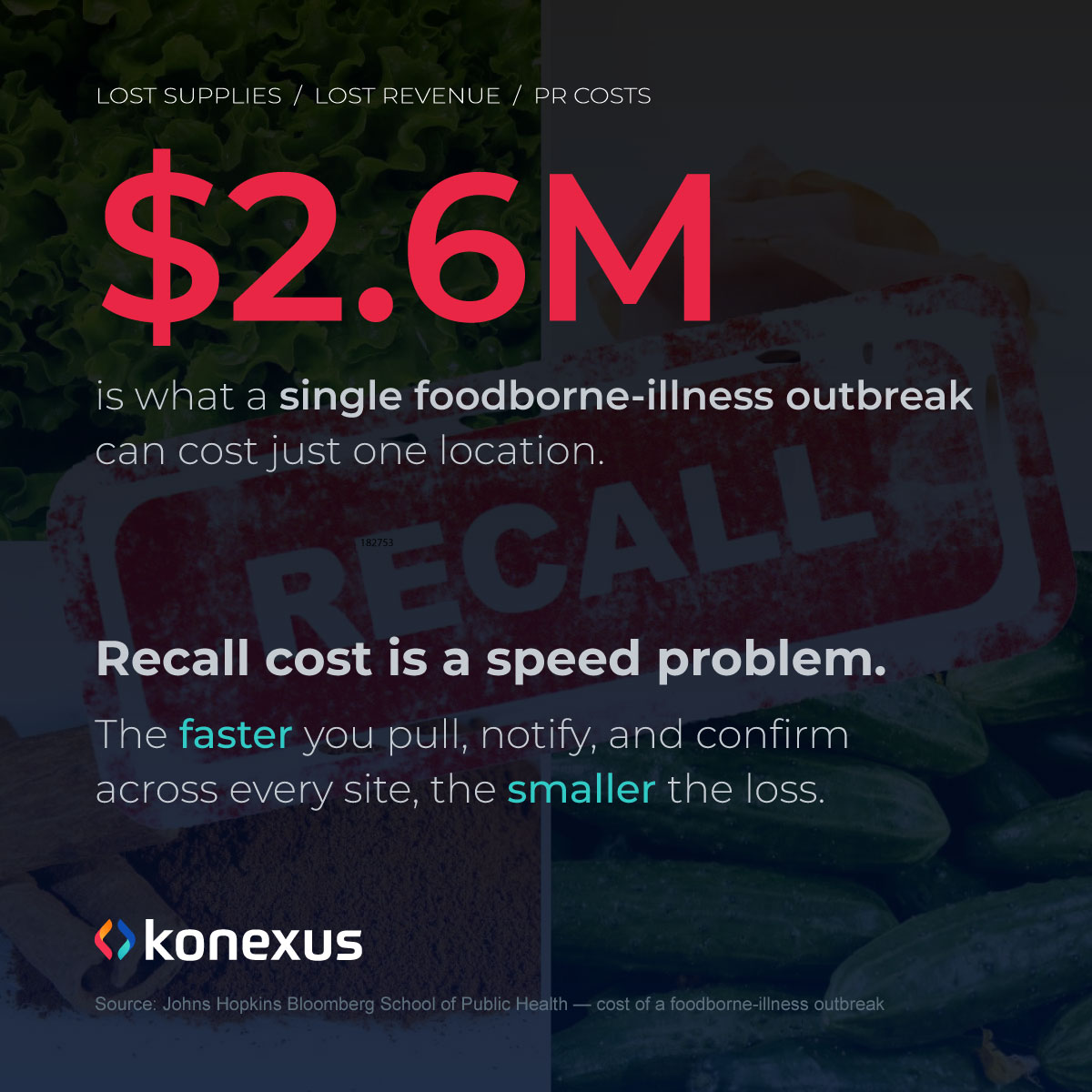
Researchers at the Johns Hopkins Bloomberg School of Public Health modeled the true cost of a single foodborne-illness outbreak at a restaurant and found it ranges from about $4,000 for a minor incident to $2.6 million for a serious one involving lawsuits, legal fees, and fines. At the high end, that single event can equal as much as 101% of a location's annual profit or revenue. The biggest cost drivers weren't the discarded product — they were lawsuits, the size of the outbreak, and lost revenue. Layer on sanitation, inspections, staff retraining, and legal counsel, and the "cost of a recall" quickly outgrows anything on the invoice.
Break it into the three buckets every operator worries about:
- Lost supplies. Pulled inventory, emergency substitutions, expedited reordering, and the labor to hunt down every affected lot across every site.
- Lost revenue. Closed outlets, cancelled bookings, comped stays, and guests who simply don't rebook. For a property or a sailing on thin margins, even a short disruption compounds fast.
- Public relations. This is the one that outlasts the others — and the one speed affects most.
Reputation damage doesn't wait for a verdict
Here's the part that should keep every hospitality leader up at night: the reputational hit lands before anyone establishes fault.
The moment your brand's name is attached to a word like "contamination," "outbreak," or "recall," guests, partners, franchisees, and vendors react — immediately. News coverage moves faster than lab confirmation. Social posts travel farther than corrections. Search results preserve the original allegation long after the all-clear. A property can be fully exonerated and still absorb lost revenue, higher marketing spend, legal costs, supply-chain disruption, and lasting damage to guest trust.
Which means the window that matters most is the first few hours — the gap between "we've been notified" and "every affected item is out of service and every guest-facing team is aligned on the message." Close that gap fast, and you contain the story. Let it stretch, and the story contains you.
Zoom out and the stakes are hard to overstate: USDA's Economic Research Service now puts the total cost of foodborne illness in the United States at $74.7 billion a year. Your goal is simply to keep your name out of that number.
Recall cost is a speed problem. Konexus is the speed platform.
If the size of the loss is set in the first hours, then your recall response is fundamentally a communication-and-coordination challenge. Reach the right people, at the right sites, with the right instructions, and confirm it actually happened. That is precisely what Konexus is built to do.
When a recall notice hits, Konexus lets your team:
- Reach everyone, everywhere, at once — multi-channel alerts by SMS, email, voice, and mobile push, so kitchen managers, F&B directors, and ship crews get the notice on the channel they'll actually see, across every property and time zone.
- Target only the sites that matter — geo-target and geofence affected locations using live mapping, so a lot recalled at twelve properties doesn't trigger noise at the other two hundred.
- Send the right message instantly — pre-built, pre-approved alert templates mean no one is writing recall instructions from scratch under pressure, and built-in translation across 240+ languages reaches every crew member in the language they read best.
- Drive the response, not just the alert — turn your recall protocol into mobile task lists with checklists assigned to the right people: pull the lot, quarantine it, document it, confirm it's done.
- Prove it happened — two-way polling and secure chat confirm every site has acted, giving leadership a real-time common operating picture instead of a flurry of phone calls.
The same platform that hospitality and travel brands trust for severe weather, security incidents, and business continuity handles a recall the same way it handles any critical event: fast, coordinated, and accountable — from a single interface anyone on your team can operate.
Sources: FDA and Sedgwick Brand Protection recall data (2024–2025); U.S. CDC Vessel Sanitation Program; Johns Hopkins Bloomberg School of Public Health, "Estimated Cost to a Restaurant of a Foodborne Illness Outbreak"; USDA Economic Research Service, Cost Estimates of Foodborne Illnesses (2023 dollars).